
 Ai Development
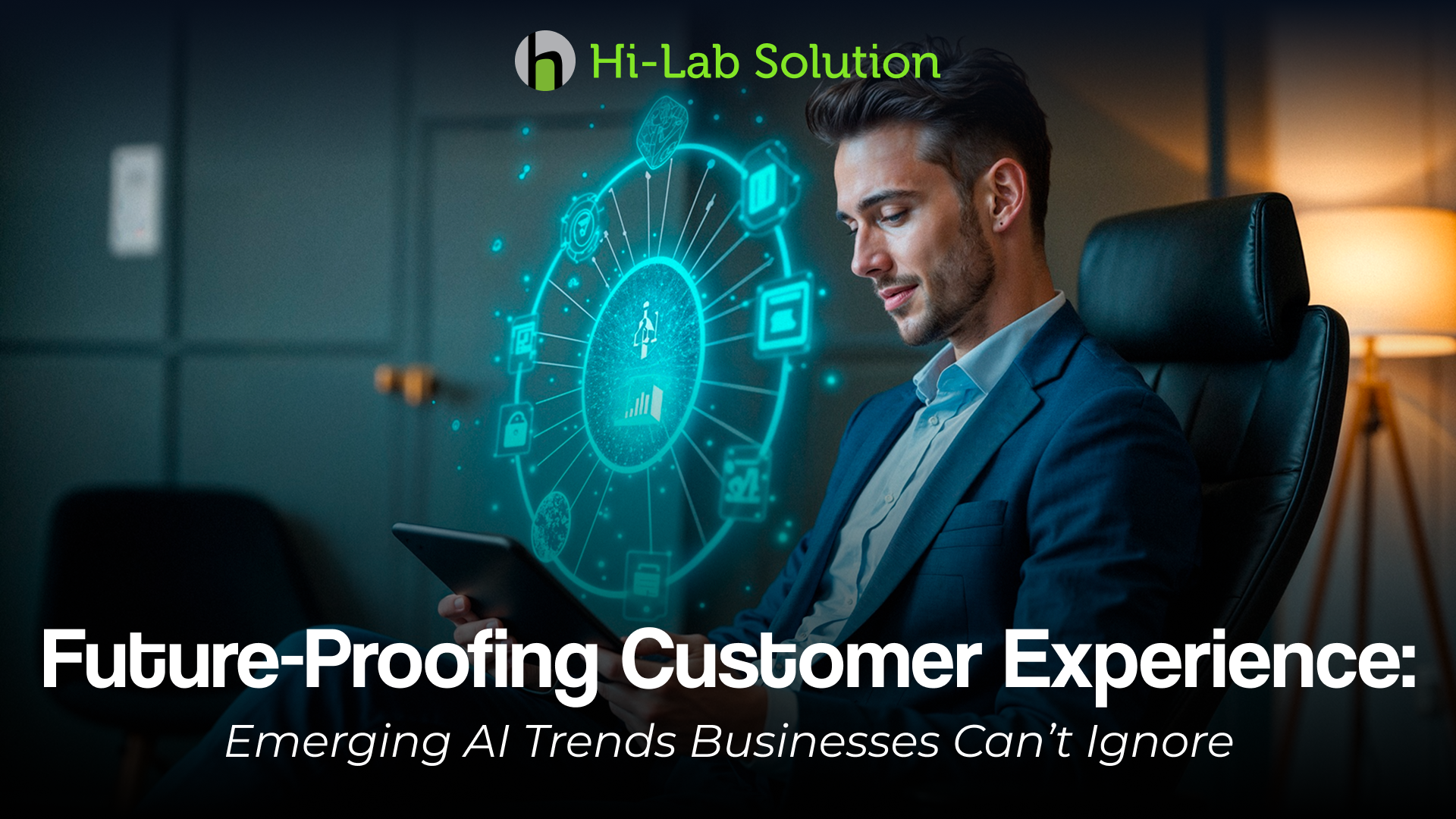
Future-Proofing Customer Experience: Emerging AI Trends Businesses Can’t Ignore
The last few years have been a revelation for customer experience (CX) — and AI is the undeniable driving force. From personalized Netflix recommendations to AI-powered customer service that answers before you even ask, the game has changed.
But here’s the thing: we’re only scratching the surface. AI isn’t just a temporary upgrade; it’s redefining how businesses attract, serve, and retain customers in a world where attention spans are short and expectations are sky-high.
So, if your last CX strategy still lives in the “chatbot-only” era, it’s time to evolve. Let’s explore the emerging AI trends that will define the future of customer experience — and how you can ride the wave before your competitors do.
1. Hyper-Personalization at Scale
Yesterday’s personalization was showing someone “Customers who bought this also bought…”
Today’s personalization? AI building a completely unique journey for each customer in real time.
Using deep learning and behavioral analysis, AI can now track micro-interactions and instantly tailor recommendations, promotions, and even website layouts.
Example:
- E-commerce stores adapt prices dynamically for loyal customers.
- Streaming services creating entirely AI-curated watchlists.
Why it matters: Customers crave relevance. Hyper-personalization increases engagement, boosts sales, and strengthens brand loyalty.
2. Predictive Customer Insights
Reactive customer service is officially outdated. Predictive AI flips the script also Ai helping businesses anticipate needs before they arise.
Real-world use cases:
- Airlines predicting delays and offering alternative flights instantly.
- Retailers identifying churn risks and sending exclusive retention offers.
- Subscription services predicting upsell opportunities.
This shift from “fixing problems” to “preventing problems” is the ultimate CX game-changer.
3. AI-Driven Voice & Conversational Interfaces

The next phase of chatbots isn’t just text-based — it’s multimodal AI that understands voice, context, and emotion.
Imagine calling customer support, and instead of navigating a frustrating IVR menu, an AI assistant greets you by name, knows your purchase history, and resolves your issue in under a minute.
Platforms like Alexa, Google Assistant, and ChatGPT-powered integrations are paving the way for frictionless, human-like customer conversations.
4. Emotional AI (Affective Computing)
Customer interactions are emotional — and AI is finally catching on.
Emotional AI uses sentiment analysis, tone recognition, and even facial expression reading to gauge a customer’s mood in real time.
Where it’s being used:
- Call centers detecting frustration and escalating to a human instantly.
- Retail kiosks adjust their tone if a customer appears stressed.
- Healthcare apps offering empathetic responses to patient queries.
This level of emotional intelligence makes AI interactions feel human, not robotic.
5. Omnichannel AI Orchestration
Your customers don’t think in “channels” — they think in journeys.
Omnichannel AI integrates data from every touchpoint — web, app, store, social media — to provide a consistent, personalized experience no matter where your customer interacts.
Example: A customer browses shoes online, visits the physical store, and receives a push notification with a discount on their favorite pair — all powered by AI recognizing their unified journey.
6. AI Co-Creation in Products & Services

In the near future, customers won’t just consume products — they’ll co-create them with AI.
- Fashion retailers let customers design outfits via AI-assisted tools.
- Streaming platforms letting users “build” custom shows or music playlists with generative AI.
- Food brands allow users to tweak flavors digitally before launch.
This gives customers a sense of ownership, deepening emotional connection to the brand.
7. Ethical AI and Customer Trust
As AI gets more powerful, the trust factor becomes make-or-break. Customers want transparency about how their data is collected, used, and protected.
Businesses embracing ethical AI — with clear privacy policies, bias-free algorithms, and explainable decision-making — will win long-term loyalty.
Challenges to Keep in Mind
- Bias in AI models can unintentionally alienate customers.
- Data privacy regulations like GDPR are becoming stricter.
- Over-automation risks losing the human touch customers still value.
Conclusion
Here’s the truth: AI isn’t replacing human-led customer experience — it’s supercharging it.
The winners in the next decade will be businesses that blend human empathy with AI efficiency, creating experiences so seamless that customers never want to leave.
The future is already here — it’s just unevenly distributed. The question is, will you be the brand leading the charge or the one struggling to catch up?
Recent Comments