
 Website Design & Development
AI-powered Business Solutions: Revolutionizing Your Operations
The integration of Artificial Intelligence (AI) into business operations is no longer a futuristic concept; it’s a present-day reality reshaping industries and driving unprecedented growth. AI-powered business solutions are becoming increasingly sophisticated, offering businesses of all sizes the opportunity to streamline processes, enhance decision-making, and gain a significant competitive edge. But what exactly does this mean for your business, and how can you harness the power of AI to achieve your goals?
Understanding the AI Revolution in Business
The term “AI revolution” might sound dramatic, but the impact of AI on businesses is undeniably transformative. We’re seeing a rapid shift from simple automation to complex systems capable of learning, adapting, and even predicting future outcomes. Think of it like this: automation handles repetitive tasks, but AI goes beyond that – it analyzes data, identifies patterns, and makes informed suggestions, freeing up human employees to focus on strategic initiatives and creative problem-solving. This isn’t just about replacing jobs; it’s about augmenting human capabilities and fostering a more efficient, productive workforce.
Key Areas Transformed by AI
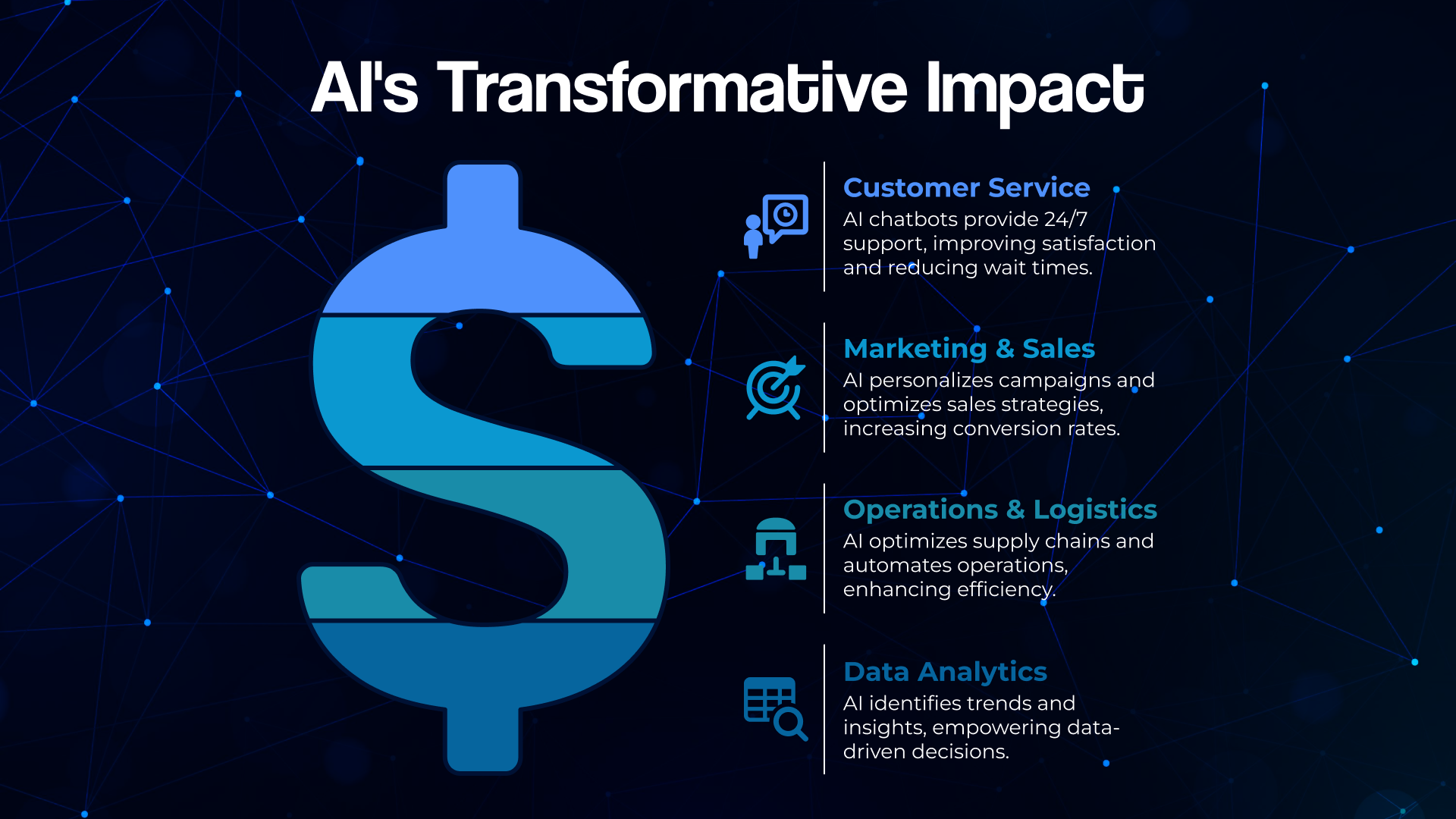
- Customer Service: AI-powered chatbots provide 24/7 support, instantly answering customer queries and resolving issues, improving customer satisfaction and reducing wait times.
- Marketing & Sales: AI algorithms analyze customer data to personalize marketing campaigns, predict customer behavior, and optimize sales strategies, leading to increased conversion rates.
- Operations & Logistics: AI optimizes supply chains, predicts demand, and automates warehouse operations, resulting in cost savings and improved efficiency. A recent study by McKinsey found that AI can improve supply chain efficiency by up to 20%.
- Data Analytics: AI sifts through vast amounts of data to identify trends, patterns, and insights that would be impossible for humans to uncover manually, empowering data-driven decision-making.
The Future of Work with AI
The future of work is inextricably linked with AI. Many fear job displacement, and it’s a valid concern. However, the reality is far more nuanced. While some roles will inevitably be automated, AI will also create new opportunities. The focus will shift towards roles requiring creativity, critical thinking, and emotional intelligence – skills that machines currently lack. Instead of replacing humans, AI will empower them, enabling them to focus on higher-value tasks and contribute more strategically to the business.
Think of it as a collaboration, not a competition. Humans bring the creativity and critical thinking, while AI handles the heavy lifting of data analysis and repetitive tasks. This synergy will lead to a more productive and fulfilling work environment for everyone.
AI-Driven Business Transformation
Embarking on an AI-driven business transformation requires a strategic approach. It’s not a quick fix; it’s a journey that involves careful planning, data analysis, and the right technology implementation. You need to identify specific areas where AI can add value, implement the appropriate technology, and most importantly, train your workforce to effectively utilize these new tools. Change management is crucial; employees need to understand the benefits of AI and how it will impact their roles.
Getting Started with AI in Your Business
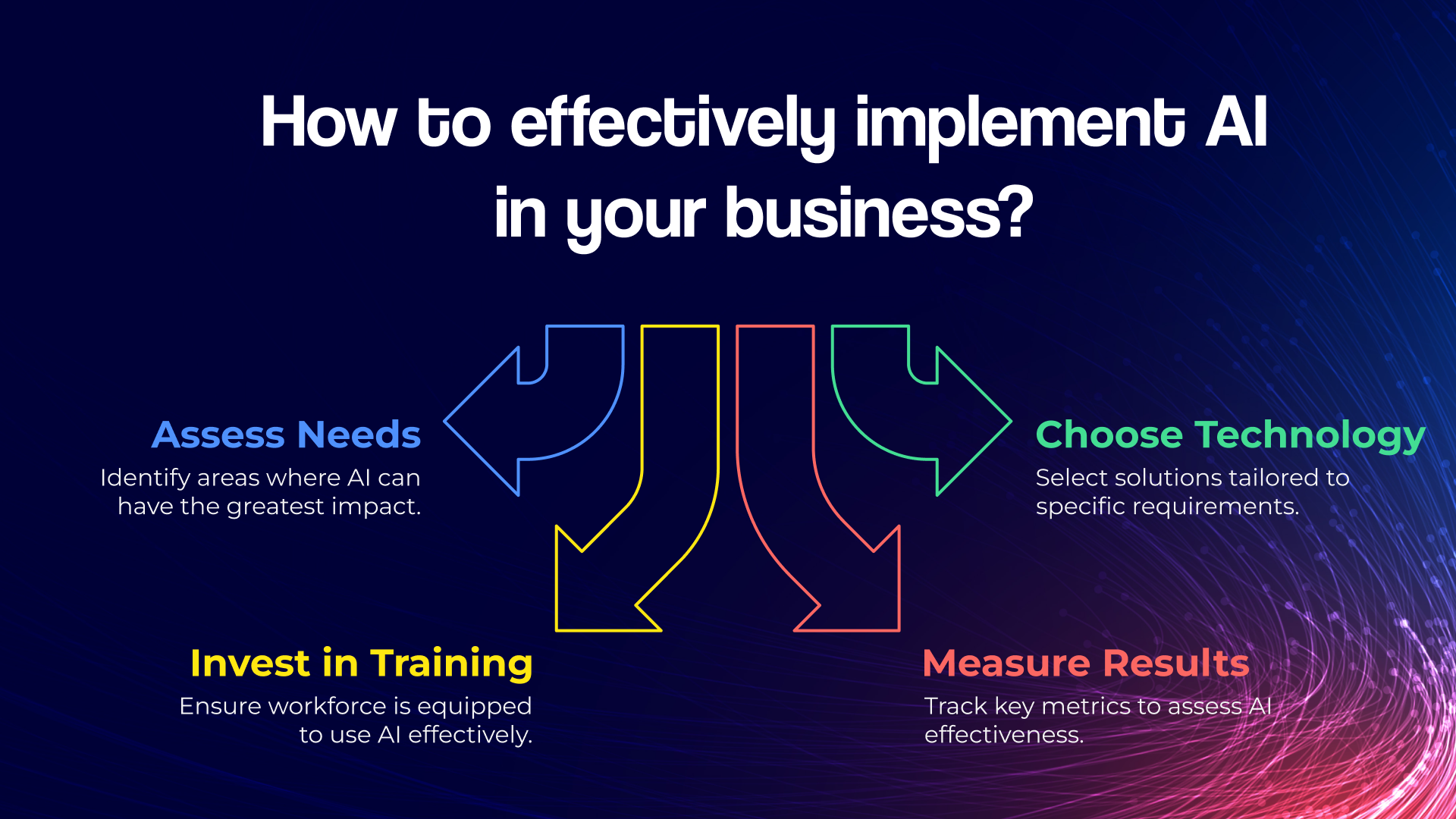
- Assess your needs: Identify areas where AI can have the greatest impact on your business.
- Choose the right technology: Select solutions tailored to your specific requirements and integrate them seamlessly with your existing systems.
- Invest in training: Ensure your workforce is equipped to use AI effectively.
- Measure your results: Track key metrics to assess the effectiveness of your AI initiatives.
Overcoming the Challenges of AI Adoption
While the potential benefits of AI are undeniable, there are also challenges. The high cost of implementation, the need for specialized skills, and concerns about data security are all significant hurdles. However, the increasing availability of affordable AI solutions and the growing pool of skilled professionals are gradually mitigating these obstacles. Careful planning, a phased approach, and a commitment to continuous learning are key to overcoming these challenges.
The future is here. AI isn’t just a trend; it’s a fundamental shift in how businesses operate. By embracing AI-powered solutions, companies can unlock unprecedented levels of efficiency, innovation, and growth. The key is to start now, strategically plan, and adapt to this exciting new era.
What do you think? Share in the comments!

Recent Comments